
Modalidades del disfraz femenino en la Crónica do Imperador Beliandro (I). La aventura de Felisaura y el rey de Inglaterra
DOI:
https://doi.org/10.13136/2284-2667/1672Palavras-chave:
libros de caballerías, Beliandro, Belindo, disfraz, personajes femeninosResumo
Se propone una aproximación a las diferentes instancias o modalidades del disfraz femenino en la Crónica do Imperador Beliandro (o Ciclo de D. Belindo), uno de los últimos libros de caballerías escritos en lengua portuguesa y atribuido por la crítica a la condesa da Vidigueira, Leonor Coutinho de Távora (fallecida en 1648). En el universo caballeresco, el disfraz femenino es un recurso literario que permite a las mujeres transgredir los límites de los roles tradicionales y explorar nuevas identidades (Trujillo, 2019). En esta ocasión, analizaremos uno de los relatos intercalados en la Parte I del Beliandro en el que el disfraz femenino desempeña un papel fundamental, esto es, la aventura de Felisaura y el rey de Inglaterra (Parte I, caps. 32-40), tal vez inspirada en el episodio de Félix y Felismena de La Diana de Jorge de Montemayor.
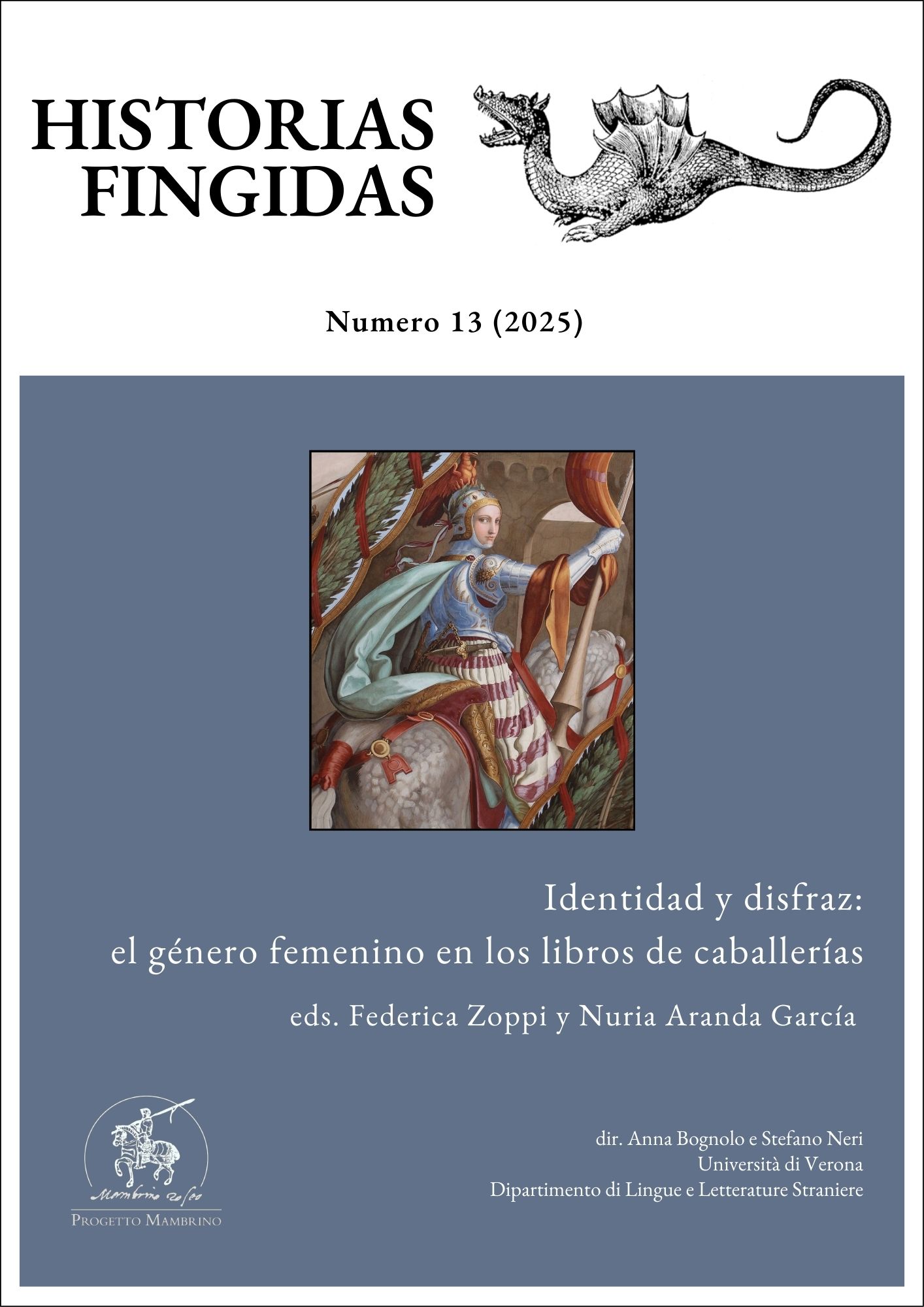
Downloads
Publicado
Edição
Secção
Licença
Direitos de Autor (c) 2025 Pedro Álvarez-Cifuentes

Este trabalho encontra-se publicado com a Licença Internacional Creative Commons Atribuição-NãoComercial 4.0.
Gli autori che pubblicano su questa rivista accettano le seguenti condizioni:- Gli autori mantengono i diritti sulla loro opera e cedono alla rivista il diritto di prima pubblicazione dell'opera, contemporaneamente licenziata sotto una Licenza Creative Commons - Attribuzione - Non Commerciale che permette ad altri di condividere l'opera indicando la paternità intellettuale e la prima pubblicazione su questa rivista a fini non commerciali .
- Gli autori possono aderire ad altri accordi di licenza non esclusiva per la distribuzione della versione dell'opera pubblicata (es. depositarla in un archivio istituzionale o pubblicarla in una monografia), a patto di indicare che la prima pubblicazione è avvenuta su questa rivista.
- Gli autori possono diffondere la loro opera online (es. in repository istituzionali o nel loro sito web) prima e durante il processo di submission, poiché può portare a scambi produttivi e aumentare le citazioni dell'opera pubblicata (Vedi The Effect of Open Access).